Blessed Love

Poltak Sirait Blog

The Siraits

Poltak Sirait Blog

Parhobas

Sosialisasi Perundang-undangan Kebudayaan

Brothers in Law

Poltak Sirait Blog

My Beloved Daddy

Your Blessing upon me always

Pages

Showing posts with label XII Grade. Show all posts

Monday, February 29, 2016

DAFTAR NILAI SMK KELAS XII ONLINE (update Feb-2016)

Daftar Nilai SMK Kelas XII Online

NoNAMAPENILAIANN.UHN.M.SEMN. RAPORSikapKehadiran
1234567AlpaCabut
1ADELIA ANGGRAINI PURBA-#DIV/0!#DIV/0!B1
2ALDI JOY VENTUS MANURUNG80205033C
3ANGGUN ENJELINA SIRAIT10908585706845B
4ANUM SARI252517B
5ARJUN MAHENDRA SARAGIH70355335C1
6CITRA ELA DEBORA SIAHAAN70707047B
7DINA SRI REZEKI SIREGAR70455838B
8EKA SARI FAUZIAH LUBIS75305335B
9ELISYAH85607348B
10FITRI SARI TAMPUBOLON70455838B
11GERMATIUS SIDABUTAR70254832B1
12HANNA TRESYA SIHOMBING70254832B
13HENWI606040B1
14INTAN MAISURI DAMANIK75657047B
15IRPAN SINAGA75405838B1
16KARTINA MONIKA SITUMORANG80406040B
17LASMIAN SIMANJUNTAK70405537B
18MULYADI PAKPAHAN75154530C11
19NAOMI SIMANJUNTAK70455838B1
20NUR AINUN SIREGAR75707348B
21PRAN PANE SIAGIAN70204530C1
22RIFALDI DAMANIK75456040C
23RIKA ANDRIANI PURBA75506342B
24RILIS ELI TRIARNA TAMBUNAN606040B
25RINDU SINURAT80456342B
26RISKY SAPUTRA75255033B1
27RIZKY ARIYUDA SARAGIH252517C1
28SARI DEWI70656845B
29SRI BANGUN70204530B
30TITIN ELINA SIANTURI555537B
31TRESYA OFTALIA PARDEDE80355838B
32WINDA WATI SIMANJUNTAK70556342B
33YOHANA FLINDA SIAHAAN70707047B
340
WALI KELAS : Leon Saidor Sinabariba, S.Pd
Keterangan Nilai :Absen Per 4 Februari


XII AP 2
NoNAMAPENILAIANN.UHN.M.SEMN. RAPORSikapKehadiran
123456AlpaCabut
1ADELIANA SINAGA8585356846B
2AFNI HANI85456543B
3AKITO LORIS SIANIPAR404027B
4BELLA SINTIA HAREPA505033B
5BUNGA INDAH SINAGA90758355B
6CRISTINE FRISKA BAKKARA85808585507751B
7DESI WULANDARI90507047B
8ELISA SEPTIME NABABAN85305838B
9FIRDA ROSAULINA HUTAURUK858585808456B
10JACKY SUDARMAN SITUMORANG85506845B
11JEREMIA Y.K454530D13
12JONATAN PEDRIK PARDEDE252517B2
13JONES HELBRON SIAHAAN555537D22
14JUAN SIMSON PURBA303020D12
15KRISDIANTORO252517B1
16LASMIDA SILABAN85406342B1
17LASMIDA SIMAMORA90708053B
18MEWA RONAULI HUTAHAEAN85808585808355B
19NAOMI SIMANJUNTAK85788585758254B1
20NOVA BERNAWATI MARBUN85205335B
21NOVIA DAMANIK90759090858657B
22NUR SYAHFITRI ZALUKHU85808080808154B
23NURSYADAH DAMANIK858080707953B
24NURSYAHFITRI858080758053B
25OLO MARHARTA SITUNGKIR404027B1
26RAHAYU SIAGIAN252517B
27RENI WIDIYAWATI85-8557B
28ROCKY SILABAN252517D21
29ROTUA ULI SIMAREMARE85657550B
30SRI WAHYUNI505033B
31SRI WULANDARI656543B
32TIKA PURNAMA SARI DAMANIK85758053B
33TOGI MARDONGAN RAJAGUKGUK454530B2
34UPIK AGUSTINA SINAGA858575657852B
35WINDA SARI202013B
360
WALI KELAS : Ramli Simaremare, S.Pd
Keterangan Nilai :


Saturday, April 25, 2015

YAYASAN TPI - SMK Farewell Party Program 2015

The last time gathering with our XII AP students. Farewell is the pair of togetherness. It's not the end but just the beginning of your real life, facing the brighter future. Good Bye and Good Luck

Family
Teachers
Class XII AP2
Lunch Time
Class XII AP2
Being Bashful
XII AP1 Girls
XII Choirs
Teachers Expression
Students Last Speech
Ms. Raimah Speech
Mr. Aritonang Speech
Mr. J Sinabariba (TPI's Head Master) Speech
Gathering Dance
The Organist Ms. Eni Samosir

Friday, April 17, 2015

Farewell Party Program

 
Farewell Party

Contoh Susunan Acara Perpisahan Sekolah

Susunan acara perpisahan yang saya buat ini mungkin belum sempurna, jadi kalau ada tambahan mohon dikoreksi dikolom komentar. Nah contoh susunan acara perpisahan sekolah yang sudah saya buat seperti di bawah ini.
  1. Pembukaan (MC)
  2. Sambutan dari Ketua Panitia
  3. Ucapan Kata – kata dari Siswa (Kelas 9 atau 12)
  4. Ucapan Kata – kata dari (Osis atau adik kelas)
  5. Sambutan dari Wali Murid
  6. Sambutan dari Kepala Sekolah
  7. Pelepasan Atibut Sekolah ( Siswa )
  8. Penyerahan Cendramata
  9. Penyerahan Hadiah untuk Siswa Berprestasi
  10.  Hiburan (Pentas Seni)
  11.  Pembacaan doa
  12.  Penutup

Penjelasan Contoh Susunan Acara Perpisahan Sekolah

1. Pembukaan (pembukaan disini dibacakan oleh MC biasanya dengan tanda atau ucapan Basmalah sebagai tanda acara perpisahan sekolah dibuka sekaligus pembacaan susunan acara perpisahan)
2. Sambutan Ketua Panitia (Sambutan ketua panitia ini berisi tentang semua kegiatan, pernyataan selamat mengikuti acara ini serta pernyataan maaf dari panitia jika ada kekurangannya)
3. Ucapan Kata – kata dari Kelas 6 SD, Kelas 9 SMP dan Kelas 12 SMA/SMK (biasanya ucapan terima kasih dan permohonan maaf dari siswa kepada pihak sekolah serta minta doa untuk melanjutkan pendidikan yang lebih tinggi. Biasanya perwakilan satu siswa saja, nah yang ditunjuk harus siap berpidato, nah untuk contoh pidato perpisahan bisa di lihat di Contoh Pidato Perpisahan Sekolah.
4. Ucapan Kata – Kata dari Adik Kelas (OSIS) (biasanya ucapan ini diwakili oleh ketua OSIS dan isinya ucapan selamat kepada kakak kelas, permintaan maaf dan terima kasih.
5. Sambutan dari Wali Murid (biasanya ucapan terima kasih kepada pihak sekolah karena telah membantu anak-anak mereka dalam menuntut ilmu sampai lulus sekolah)
6. Sambutan dari Kepala Sekolah ( biasanya kepala sekolah menyampaikan selamat kepada siswa karena telah lulus serta kesan, pesan kedepan)
7. Pelepasan Atribut Sekolah ( biasanya perwakilan 2 orang siswa dan siswi untuk dilepas atribut sekolah oleh kepala sekolah)
8. Penyerahan Cindera Mata (biasanya penyerahan cindera mata kepada bapak/ibu guru sebagai ucapan terima kasih)
9. Penyerahan Hadiah untuk siswa berprestasi (kalau ada)
10. Hiburan (acara ini merupakan acara santai dan biasanya diisi oleh penampilan siswa tentang seni, ada yang menyanyi, baca puisi, dan band. Buat yang biasa mengadakan kegiatan pensi biasanya tampil disini, nah ini contoh proposal kegiatan pensi yang sering digunakan.
11. Pembacaan doa (ada yang membacakan doa, biasanya oleh guru agama disekolah)
12. Penutup (Biasanya oleh MC dengan bacaan alhmdllah)
Nah itulah Farewell Party Program yang bisa dijadikan referensi. Untuk selanjutnya semua terserah kepada panitia perpisahan mau bagaimana acara tersebut dibuat.

SUMBER :  http://belajarpsikologi.com

Monday, April 13, 2015

Shopping vocabulary


”Shopping”/

  1. Transaction i.e. buying and selling
  • To be on sale (adjective phrase): Sometimes shop keepers purposely reduce the price of the product to attract more customers. When this happens, we say that the products are on sale.
Example: Is there anything on sale? I don’t have much money left.
Example: This pair of shoes is on sale, 50% off.
  • Price/Cost (noun): you probably already know these words. Here are some ways that you can use them.
Example: How much does it cost?
Example: What’s the price for 3 cartons of milk?
  • Pay (verb): you already know the word pay so here are some ways in which you can pay for something.
Pay by cash is to pay with actual money directly.
Pay with Credit/Debit card is to use your bank-issued plastic card to pay. A credit card lends you some money, which needs to be paid back to the bank later. A debit card directly links to your bank account.
  • Taxes (noun): Have you noticed that when you buy something for 15 dollars, you may actually need to pay more than 15 dollars. This is because the government has imposed some taxes upon that product. There are two types of prices: taxes incl. (included) or taxes not included.
If the price is taxes incl. you only have to pay for what is listed on the price tag.
If it is taxes not include, well, you need to pay for what’s listed and for taxes as well. Be careful!
  • Discount (noun): While a sale is something that the seller organizes, a discount is something that you need to ask for. For example, if your jacket has a small scratch, you may ask for a discount. Or if you want to buy 10 pair of shoes at the same time, you may also ask for a discount.
Example: I know this shirt is not on sale but can I get a discount if I buy 5 of them?

  1. Making it your own
  • Style (noun): you already know how important the style of a product is. You can use kind or type to mean the same thing.
Example: What type of pants do you like?
Example: Do you think this style suits me?
Example: This store doesn’t have the kind of jackets that I need.
  • Size (noun): there are many ways to measure the size of a product, either by number or by letter. Depending on the metric system that your country uses, you can be wearing size 8 for your shoes or size 42. Using letters such a S, M and L is common too. S stands for small, M for medium and L for large. If you see XS, it means extra small, or even smaller than small.
Example: Do you have a size L shirt of the same style?
  • Color (noun): or colour in British English. Some people prefer to wear monochromatic clothing, which means clothes that have only one color. The prefix mono means one and the root chromatic means color.
Example: Are these products available in any other color? I hate black.

  1. The base products
While you can change the style, size or color of a product, you are not likely to change its features and benefits.
  • Feature (noun): a feature is something that the product has. For example, a feature of a car is its brakes or a feature of a cup is the handle.
Example: I would like to know more about this car’s features.
Example: There are many useless features in this fridge. I just need a durable one please.
Tip: You can use feature as a verb to mean to have something. For example: This camera features the latest technology in noise reduction.
  • Benefit (noun): a benefit is something that is good for you. You may hear the salesman talking about a lot of modern features on a product but you do not really understand how they are going to help you. If so, you may ask “What are the benefits of using this product?”
Example: There are many benefits of drinking water regularly.
Tip: It can also be used as a verb to mean to be good for something. For example: How does this TV benefit me?

  1. After you have bought it
Even when you have had a good deal and bought something on sale, you must not leave the shop without these 3 things:
  • Warranty (noun): sometimes when you buy an expensive product like a laptop or a TV, the manufacturer issues a warranty. A warranty is a promise that, within a certain amount of time, if anything is wrong with the product, the manufacturer will fix it for you, for free.
Example: Does this have a warranty? I paid five thousands for it.
Tip: You can ask if something is still in warranty to check if the company still offers to fix it for free.
  • Return policy (noun): while the warranty is from the manufacturer i.e. who actually make the product, a return policy is issued by the store or the one who is selling the product. Some store may have a return policy which states that you will exchange a new product for you if the old one spoils, for example.
Example: I’m sorry but we have no return policy. You need to bring your microwave to the manufacturer.
  • Receipt (noun): a receipt is a proof that you have paid money for something. On your receipt, you will see the price, the date of purchase, If you do not have a receipt to prove that you own the product, there’s no warranty nor return policy for you!
Example: Can you show me the receipt? I need it to process your warranty claim.


In conclusion, we have learned about 4 steps of shopping. You start by studying the features and benefits of a product. Then, you choose the suitable style, size and color for your own usage. You can make a purchase by paying by cash or paying with credit/debit cards. You may even get a good deal if the product is on sale or if you ask for a discount. Finally, before leaving the store, remember to ask about the warranty and the return policy and DO NOT lose your receipt.

Saturday, April 11, 2015

UN Kejujuran

Thursday, April 9, 2015

Quantifiers

What are quantifiers?

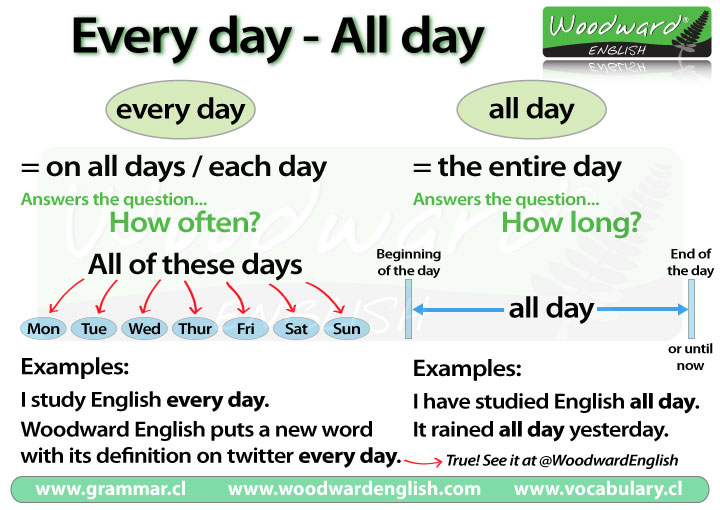
Quantifiers tell us something about the amount or quantity of something (a noun).
Some quantifiers express a small or large quantity:
  • Small: I have a few things to do before finishing work.
  • Large: I have many things to do before finishing work.
Some quantifiers express part of or all of a quantity:
  • Part: It rains most days in winter.
  • All: It rained all day yesterday.
Quantifiers belong to a larger class called Determiner.

Examples of quantifiers

Quantifiers can be a single word (e.g. some) or a phrase (e.g. a lot of). Quantifiers that appear as a phrase are often called Complex Quantifiers.
Simple Quantifiers: all, another, any, both, each, either, enough, every, few, fewer, little, less, many, more, much, neither, no, several, some.
Complex Quantifiers: a few, a little, a lot of, lots of

The position of quantifiers

We put quantifiers at the beginning of noun phrases.
quantifier + noun
  • some people
quantifier + adjective + noun
  • many old books
quantifier + adverb + adjective + noun
  • a lot of very crazy drivers
We can also use quantifiers without a noun, like a pronoun.
  • These books are old but some are still in good condition. (Some refers to some books)

Quantifier + Noun

CHART COMING SOON

Formal and Informal Quantifiers

Sometimes we can make a sentence more formal or more informal (or natural) just by changing the quantifier.
Many people where invited to the wedding. (formal)
A lot of people arrived late. (informal/natural)
They made little progress. (formal)
They didn't make much progress. (informal/natural)

The Differerence Or Versus in English


HOUSE and HOME

Something that confuses people learning English is the difference between HOUSE and HOME
A HOUSE is the BUILDING where the majority of people live. It normally has bedrooms, a kitchen, a living room, a bathroom and a dining room.
A HOME is a PLACE where someone lives. Normally it is a house but it can be other things too: a narrowboat (a boat on a canal which someone lives in), a caravan (a house which is similar to a van or truck, which can be driven around) or an apartment (a kitchen, living room, dining room and bedroom(s) in a building that has other apartments in it). Home is often associated with a family and/or the place you feel attached to.

Types of Houses

There are many types of houses. One of the most common is a detached house – a house which stands on its own and touches nothing else).
Another type of house is a semi-detached house (called a duplex in the US). This type of house touches another house on one side, and they share the wall between them.
A common house in London is a terrace house (called a row house in the US) which touches another house on both sides.
A fourth type of house is a bungalow (called a ranch house in the US). This type of house only has one floor and doesn’t have any stairs. They are uncommon in the UK because they take up a lot of land but they are more common in the US.

So a HOUSE is a building where many people live and a HOME is the place you live.
Animals have homes but they don’t have houses (apart from dogs – a doghouse is the small wooden house where a dog sleeps outside).
What do we call a fox’s home? A den (the hole in the ground where a fox lives).
And a rabbit? A warren (the maze of tunnels underground where a large group of rabbits live).


Phrases and Idioms associated with Houses and Homes

There are many phrases and idioms associated with houses and homes. Here are some of them:
Home Sweet Home
It means that the best and most comfortable place is your home. When arriving home from a long day at work you might think ‘Ahh… Home Sweet Home’.
Make a house a home
This means to change a house (just a building) into a home (somewhere comfortable where you can relax). People often say that it takes a woman to make a house a home!
To move house
This means to change the house that you live in. For example: ‘We used to live in New York but we moved house. Now we live in Chicago.’
To call somewhere home
A common phrase is ‘So, where do you call home?’. This means where do you come from? or where is your home? You might be living in another city or a foreign country for a while (months or years) though you may not consider it your home, just somewhere where you are living for now.

Wednesday, April 1, 2015

XII Student Final Speaking Test Job Interview


Practice speaking test of Class XII AP 1, Title: Job Interview Performed by Valen S & Dewi.

Thursday, March 26, 2015

DKN XII AP (updated)

Enroll below the page than click your class.
Roll Ke halaman bawah dan klik sesuai kelas.


Monday, March 23, 2015

PERUBAHAN UN 2015

UN 2015 TUDAK MENENTUKAN KELULUSAN.


Wednesday, March 18, 2015

XII AP 1 Remedial Test

Please submit your remedial sheet on Thursday March, 19 2015.
Remedial dikumpul pada hari Kamis, 19 Maret 2015.

Tuesday, March 3, 2015

Conditional Sentences

IF Conditional 

Because conditional sentences are quite complex in both form and meaning, they are a problem for most learners of English. If you have a good understanding of the English tense system and of the modal auxiliaries, you will find it easier to understand and use conditional sentences. (The sentence you just read is a predictive conditional sentence.) All conditional sentences contain a dependent clause and an independent clause. The dependent clause usually begins with if; it expresses a condition. The independent clause expresses a result of the condition. The if-clause is usually first, but the order of the clauses is usually not important. Thus, these two sentences have basically the same meaning:

If she goes to the store, she will buy ice cream.

She will buy ice cream if she goes to the store.
You have probably noticed that different teachers, textbooks, and Web sites sometimes explain the same thing in different ways. This seems to be especially true of conditional sentences. However, two different explanations can both be correct, especially if the difference is due to the fact that complicated material has been organized in different ways. This is often true of explanations of conditionals that you find in your textbooks. Here conditional sentences are divided into three types based on their meanings: real, predictive, and imaginative conditional sentences.
Also see The Sentence, Modal Auxiliaries, Verbs A-L, Verbs M-Z, Tenses, and Adverb Clauses.

A. Real conditional sentences can express generalizations and inferences.
1. Generalizations include facts that are always true and never change, and they include present or past habitual activities that are or were usually true.
Real conditionals expressing generalizations usually have the same tense (usually simple present or simple past) in both clauses. However, if the simple present tense is used in the if-clause, will + verb can be used in the main clause without changing the meaning.
Examples of real conditional sentences expressing facts:

If water boils, it turns to steam.

If water boils, it will turn to steam.
Examples of real conditional sentences expressing habitual activities:

If he eats breakfast, he feels better all day.

If he eats breakfast, he will feel better all day.

If he ate breakfast, he felt better all day.
These generalizations can also be expressed by using when or whenever instead of if:

When water boils, it turns to steam.

When he eats breakfast, he feels better all day.

When he ate breakfast, he felt better all day.
2. Inferences are often expressed in real conditional sentences.
Real conditionals expressing inferences usually have parallel verb phrases in both clauses. However, if a modal which explicitly expresses an inference (must or should, for example) is used in the main clause, parallel verb phrases are not used.
Examples of real conditional sentences expressing inferences:

If today is Wednesday, it is George’s birthday.

If I can do it, anyone can do it.

if it is raining, the streets are getting wet.

If he was at school, he saw the accident.

If today is Wednesday, it must be George’s birthday.

If I can do it, anyone must be able to do it.

if it is raining, the streets must be getting wet.

If he was at school, he must have seen the accident.

B. Predictive conditional sentences can express predictions and plans.
1. Predictive conditional sentences usually contain simple present tense in the if-clause and will or be going to in the result clause. However, a weaker modal of prediction (may or should, for example) can be used in the result clause to express less certainty.
2. Examples of predictive conditional sentences:

If the exam is hard, many students are going to fail.

If Mary does well on the final exam, she will get an A in the class.

If George does well on the final exam, he may get an A in the class.

If Fred studies, he should pass the exam.

C. Imaginative conditional sentences are the most difficult for many learners of English because of the unusual relationship between form (the tenses used) and meaning.
In this type of conditional sentence, past tense refers to present or future time; past perfect tense refers to past time. Another problem for many learners of English is that were (not was) is used with singular subjects. Be is the only English verb with two past tense forms, but only one of them (were) is used in imaginative conditional sentences.
Imaginative conditional sentences can express hypothetical or contrary-to-fact events or states.
1. Hypothetical events or states are unlikely but possible in the present or future.
Imaginative conditional sentences expressing hypothetical events or states have a past tense verb in the if-clause and would + verb (or might or could + verb) in the result clause.
Examples of hypothetical conditional sentences (present and/or future time):

If George had enough money, he would buy a new car.

If I won the lottery, I would buy you a present.

If she knew the answer, she would tell us.
(George probably does not have enough money; I probably will not win the lottery; she probably does not know the answer.)
2. Contrary-to-fact events or states are either impossible in the present time or did not happen in the past.
Imaginative conditional sentences expressing present contrary-to-fact events or states have a past verb in the if-clause and would + verb (or might or could + verb) in the result clause. Some examples:

If I were you, I would not do that.

If she studied for exams, she would get better grades.

If it were raining, the streets would be wet.

(I am not you; she doesn’t study for exams; it isn’t raining.)
Imaginative conditional sentences expressing past contrary-to-fact events or states have a past perfect verb in the if-clause and would + have + verb (or might or could + have + verb) in the result clause. Some examples:

If George had had enough money, he would have bought a new car.

If I had won the lottery, I would have bought you a present.

If she had known the answer, she would have told us.

(George did not have enough money; I did not win the lottery; she did not know the answer.)

Ordering Adjectives Practice

Adjectives

Definition


Adjectives are words that describe or modify another person or thing in the sentence. The Articlesa, an, and the — are adjectives.
  • the tall professor
  • the lugubrious lieutenant
  • a solid commitment
  • a month's pay
  • a six-year-old child
  • the unhappiest, richest man
If a group of words containing a subject and verb acts as an adjective, it is called an Adjective Clause. My sister, who is much older than I am, is an engineer. If an adjective clause is stripped of its subject and verb, the resulting modifier becomes an Adjective Phrase: He is the man who is keeping my family in the poorhouse.
Before getting into other usage considerations, one general note about the use — or over-use — of adjectives: Adjectives are frail; don't ask them to do more work than they should. Let your broad-shouldered verbs and nouns do the hard work of description. Be particularly cautious in your use of adjectives that don't have much to say in the first place: interesting, beautiful, lovely, exciting. It is your job as a writer to create beauty and excitement and interest, and when you simply insist on its presence without showing it to your reader — well, you're convincing no one.
Consider the uses of modifiers in this adjectivally rich paragraph from Thomas Wolfe's Look Homeward, Angel. (Charles Scribner's, 1929, p. 69.) Adjectives are highlighted in this color; participles, verb forms acting as adjectives, are highlighted in this blue. Some people would argue that words that are part of a name — like "East India Tea House — are not really adjectival and that possessive nouns — father's, farmer's — are not technically adjectives, but we've included them in our analysis of Wolfe's text.
He remembered yet the East India Tea House at the Fair, the sandalwood, the turbans, and the robes, the cool interior and the smell of India tea; and he had felt now the nostalgic thrill of dew-wet mornings in Spring, the cherry scent, the cool clarion earth, the wet loaminess of the garden, the pungent breakfast smells and the floating snow of blossoms. He knew the inchoate sharp excitement of hot dandelions in young earth; in July, of watermelons bedded in sweet hay, inside a farmer's covered wagon; of cantaloupe and crated peaches; and the scent of orange rind, bitter-sweet, before a fire of coals. He knew the good male smell of his father's sitting-room; of the smooth worn leather sofa, with the gaping horse-hair rent; of the blistered varnished wood upon the hearth; of the heated calf-skin bindings; of the flat moist plug of apple tobacco, stuck with a red flag; of wood-smoke and burnt leaves in October; of the brown tired autumn earth; of honey-suckle at night; of warm nasturtiums, of a clean ruddy farmer who comes weekly with printed butter, eggs, and milk; of fat limp underdone bacon and of coffee; of a bakery-oven in the wind; of large deep-hued stringbeans smoking-hot and seasoned well with salt and butter; of a room of old pine boards in which books and carpets have been stored, long closed; of Concord grapes in their long white baskets.
An abundance of adjectives like this would be uncommon in contemporary prose. Whether we have lost something or not is left up to you.

Position of Adjectives

Unlike Adverbs, which often seem capable of popping up almost anywhere in a sentence, adjectives nearly always appear immediately before the noun or noun phrase that they modify. Sometimes they appear in a string of adjectives, and when they do, they appear in a set order according to category. (See Below.) When indefinite pronouns — such as something, someone, anybody — are modified by an adjective, the adjective comes after the pronoun:
Anyone capable of doing something horrible to someone nice should be punished.
Something wicked this way comes.
And there are certain adjectives that, in combination with certain words, are always "postpositive" (coming after the thing they modify):
The president elect, heir apparent to the Glitzy fortune, lives in New York proper.
See, also, the note on a- adjectives, below, for the position of such words as "ablaze, aloof, aghast."

Degrees of Adjectives

Adjectives can express degrees of modification:
  • Gladys is a rich woman, but Josie is richer than Gladys, and Sadie is the richest woman in town.
The degrees of comparison are known as the positive, the comparative, and the superlative. (Actually, only the comparative and superlative show degrees.) We use the comparative for comparing two things and the superlative for comparing three or more things. Notice that the word than frequently accompanies the comparative and the word the precedes the superlative. The inflected suffixes -er and -est suffice to form most comparatives and superlatives, although we need -ier and -iest when a two-syllable adjective ends in y (happier and happiest); otherwise we use more and most when an adjective has more than one syllable.
GrammarRock
Click on the "scary bear" to read and hear George Newall's "Unpack Your Adjectives" (from Scholastic Rock, 1975).
Schoolhouse Rock® and its characters and ABCother elements are trademarks and service marks of American Broadcasting Companies, Inc. Used with permission.

PositiveComparativeSuperlative
richricherrichest
lovelylovelierloveliest
beautifulmore beautifulmost beautiful
Certain adjectives have irregular forms in the comparative and superlative degrees:
Irregular Comparative and Superlative Forms
goodbetterbest
badworseworst
littlelessleast
much
many
some
moremost
farfurtherfurthest

Be careful not to form comparatives or superlatives of adjectives which already express an extreme of comparison — unique, for instance — although it probably is possible to form comparative forms of most adjectives: something can be more perfect, and someone can have a fuller figure. People who argue that one woman cannot be more pregnant than another have never been nine-months pregnant with twins.
Grammar's ResponseAccording to Bryan Garner, "complete" is one of those adjectives that does not admit of comparative degrees. We could say, however, "more nearly complete." I am sure that I have not been consistent in my application of this principle in the Guide (I can hear myself, now, saying something like "less adequate" or "more preferable" or "less fatal"). Other adjectives that Garner would include in this list are as follows:
         absolute         impossible         principal
         adequate         inevitable         stationary
         chief         irrevocable         sufficient
         complete         main         unanimous
         devoid         manifest         unavoidable
         entire         minor         unbroken
         fatal         paramount         unique
         final         perpetual         universal
         ideal         preferable         whole

From The Oxford Dictionary of American Usage and Styleby Bryan Garner. Copyright 1995 by Bryan A. Garner. Published by Oxford University Press, Inc., www.oup-usa.org, and used with the gracious consent of Oxford University Press.

Be careful, also, not to use more along with a comparative adjective formed with -er nor to use most along with a superlative adjective formed with -est (e.g., do not write that something is more heavier or most heaviest).
The as — as construction is used to create a comparison expressing equality:
  • He is as foolish as he is large.
  • She is as bright as her mother.

Premodifiers with Degrees of Adjectives

Both adverbs and adjectives in their comparative and superlative forms can be accompanied by premodifiers, single words and phrases, that intensify the degree.
  • We were a lot more careful this time.
  • He works a lot less carefully than the other jeweler in town.
  • We like his work so much better.
  • You'll get your watch back all the faster.
The same process can be used to downplay the degree:
  • The weather this week has been somewhat better.
  • He approaches his schoolwork a little less industriously than his brother does.
And sometimes a set phrase, usually an informal noun phrase, is used for this purpose:
  • He arrived a whole lot sooner than we expected.
  • That's a heck of a lot better.
If the intensifier very accompanies the superlative, a determiner is also required:
  • She is wearing her very finest outfit for the interview.
  • They're doing the very best they can.
Occasionally, the comparative or superlative form appears with a determiner and the thing being modified is understood:
  • Of all the wines produced in Connecticut, I like this one the most.
  • The quicker you finish this project, the better.
  • Of the two brothers, he is by far the faster.
Authority for this section: A University Grammar of English by Randolph Quirk and Sidney Greenbaum. Longman Group: Essex, England. 1993. Used with permission.

Less versus Fewer
When making a comparison between quantities we often have to make a choice between the words fewer and less. Generally, when we're talking about countable things, we use the word fewer; when we're talking about measurable quantities that we cannot count, we use the word less. "She had fewer chores, but she also had less energy." The managers at our local Stop & Shop seem to have mastered this: they've changed the signs at the so-called express lanes from "Twelve Items or Less" to "Twelve Items or Fewer." Whether that's an actual improvement, we'll leave up to you. We do, however, definitely use less when referring to statistical or numerical expressions:
  • It's less than twenty miles to Dallas.
  • He's less than six feet tall.
  • Your essay should be a thousand words or less.
  • We spent less than forty dollars on our trip.
  • The town spent less than four percent of its budget on snow removal.
In these situations, it's possible to regard the quantities as sums of countable measures.

Taller than I / me ??
When making a comparison with "than" do we end with a subject form or object form, "taller than I/she" or "taller than me/her." The correct response is "taller than I/she." We are looking for the subject form: "He is taller than I am/she is tall." (Except we leave out the verb in the second clause, "am" or "is.") Some good writers, however, will argue that the word "than" should be allowed to function as a preposition. If we can say "He is tall like me/her," then (if "than" could be prepositional like like) we should be able to say, "He is taller than me/her." It's an interesting argument, but — for now, anyway — in formal, academic prose, use the subject form in such comparisons. We also want to be careful in a sentence such as "I like him better than she/her." The "she" would mean that you like this person better than she likes him; the "her" would mean that you like this male person better than you like that female person. (To avoid ambiguity and the slippery use of than, we could write "I like him better than she does" or "I like him better than I like her.")

More than / over ??
In the United States, we usually use "more than" in countable numerical expressions meaning "in excess of" or "over." In England, there is no such distinction. For instance, in the U.S., some editors would insist on "more than 40,000 traffic deaths in one year," whereas in the UK, "over 40,000 traffic deaths" would be acceptable. Even in the U.S., however, you will commonly hear "over" in numerical expressions of age, time, or height: "His sister is over forty; she's over six feet tall. We've been waiting well over two hours for her."


The Order of Adjectives in a Series

It would take a linguistic philosopher to explain why we say "little brown house" and not "brown little house" or why we say "red Italian sports car" and not "Italian red sports car." The order in which adjectives in a series sort themselves out is perplexing for people learning English as a second language. Most other languages dictate a similar order, but not necessarily the same order. It takes a lot of practice with a language before this order becomes instinctive, because the order often seems quite arbitrary (if not downright capricious). There is, however, a pattern. You will find many exceptions to the pattern in the table below, but it is definitely important to learn the pattern of adjective order if it is not part of what you naturally bring to the language.
The categories in the following table can be described as follows:
  1. Determiners — articles and other limiters. See Determiners
  2. Observation — postdeterminers and limiter adjectives (e.g., a real hero, a perfect idiot) and adjectives subject to subjective measure (e.g., beautiful, interesting)
  3. Size and Shape — adjectives subject to objective measure (e.g., wealthy, large, round)
  4. Age — adjectives denoting age (e.g., young, old, new, ancient)
  5. Color — adjectives denoting color (e.g., red, black, pale)
  6. Origin — denominal adjectives denoting source of noun (e.g., French, American, Canadian)
  7. Material — denominal adjectives denoting what something is made of (e.g., woolen, metallic, wooden)
  8. Qualifier — final limiter, often regarded as part of the noun (e.g., rocking chair, hunting cabin, passenger car, book cover)
# THE ROYAL ORDER OF ADJECTIVES #
DeterminerObservationPhysical DescriptionOriginMaterialQualifierNoun
SizeShapeAgeColor
abeautifuloldItaliantouringcar
anexpensiveantiquesilvermirror
fourgorgeouslong-
stemmed
redsilkroses
hershortblackhair
ourbigoldEnglishsheepdog
thosesquarewoodenhatboxes
thatdilapidatedlittlehuntingcabin
severalenormousyoungAmericanbasketballplayers
somedeliciousThaifood
#This chart is probably too wide to print on a standard piece of paper. If you click HERE, you will get a one-page duplicate of this chart, which you can print out on a regular piece of paper.
It would be folly, of course, to run more than two or three (at the most) adjectives together. Furthermore, when adjectives belong to the same class, they become what we call coordinated adjectives, and you will want to put a comma between them: the inexpensive, comfortable shoes. The rule for inserting the comma works this way: if you could have inserted a conjunction — and or but — between the two adjectives, use a comma. We could say these are "inexpensive but comfortable shoes," so we would use a comma between them (when the "but" isn't there). When you have three coordinated adjectives, separate them all with commas, but don't insert a comma between the last adjective and the noun (in spite of the temptation to do so because you often pause there):
a popular, respected, and good looking student
See the section on Commas for additional help in punctuating coordinated adjectives.

Capitalizing Proper Adjectives

When an adjective owes its origins to a proper noun, it should probably be capitalized. Thus we write about Christian music, French fries, the English Parliament, the Ming Dynasty, a Faulknerian style, Jeffersonian democracy. Some periods of time have taken on the status of proper adjectives: the Nixon era, a Renaissance/Romantic/Victorian poet (but a contemporary novelist and medieval writer). Directional and seasonal adjectives are not capitalized unless they're part of a title:
We took the northwest route during the spring thaw. We stayed there until the town's annual Fall Festival of Small Appliances.
See the section on Capitalization for further help on this matter.

Collective Adjectives

When the definite article, the, is combined with an adjective describing a class or group of people, the resulting phrase can act as a noun: the poor, the rich, the oppressed, the homeless, the lonely, the unlettered, the unwashed, the gathered, the dear departed. The difference between a Collective Noun (which is usually regarded as singular but which can be plural in certain contexts) and a collective adjective is that the latter is always plural and requires a plural verb:
  • The rural poor have been ignored by the media.
  • The rich of Connecticut are responsible.
  • The elderly are beginning to demand their rights.
  • The young at heart are always a joy to be around.

Adjectival Opposites

The opposite or the negative aspect of an adjective can be formed in a number of ways. One way, of course, is to find an adjective to mean the opposite — an antonym. The opposite of beautiful is ugly, the opposite of tall is short. A thesaurus can help you find an appropriate opposite. Another way to form the opposite of an adjective is with a number of prefixes. The opposite of fortunate is unfortunate, the opposite of prudent is imprudent, the opposite of considerate is inconsiderate, the opposite of honorable is dishonorable, the opposite of alcoholic is nonalcoholic, the opposite of being properly filed is misfiled. If you are not sure of the spelling of adjectives modified in this way by prefixes (or which is the appropriate prefix), you will have to consult a dictionary, as the rules for the selection of a prefix are complex and too shifty to be trusted. The meaning itself can be tricky; for instance, flammable and inflammable mean the same thing.
A third means for creating the opposite of an adjective is to combine it with less or least to create a comparison which points in the opposite direction. Interesting shades of meaning and tone become available with this usage. It is kinder to say that "This is the least beautiful city in the state." than it is to say that "This is the ugliest city in the state." (It also has a slightly different meaning.) A candidate for a job can still be worthy and yet be "less worthy of consideration" than another candidate. It's probably not a good idea to use this construction with an adjective that is already a negative: "He is less unlucky than his brother," although that is not the same thing as saying he is luckier than his brother. Use the comparative less when the comparison is between two things or people; use the superlative least when the comparison is among many things or people.
  • My mother is less patient than my father.
  • Of all the new sitcoms, this is my least favorite show.

Some Adjectival Problem Children

Good versus Well
In both casual speech and formal writing, we frequently have to choose between the adjective good and the adverb well. With most verbs, there is no contest: when modifying a verb, use the adverb.
He swims well.
He knows only too well who the murderer is.
However, when using a linking verb or a verb that has to do with the five human senses, you want to use the adjective instead.
How are you? I'm feeling good, thank you.
After a bath, the baby smells so good.
Even after my careful paint job, this room doesn't look good.
Many careful writers, however, will use well after linking verbs relating to health, and this is perfectly all right. In fact, to say that you are good or that you feel good usually implies not only that you're OK physically but also that your spirits are high.
"How are you?"
"I am well, thank you."
Bad versus Badly
When your cat died (assuming you loved your cat), did you feel bad or badly? Applying the same rule that applies to good versus well, use the adjective form after verbs that have to do with human feelings. You felt bad. If you said you felt badly, it would mean that something was wrong with your faculties for feeling.

Other Adjectival Considerations

Review the section on Compound Nouns and Modifiers for the formation of modifiers created when words are connected: a four-year-old child, a nineteenth-century novel, an empty-headed fool.
Review the section on Possessives for a distinction between possessive forms and "adjectival labels." (Do you belong to a Writers Club or a Writers' Club?)
Adjectives that are really Participles, verb forms with -ing and -ed endings, can be troublesome for some students. It is one thing to be a frightened child; it is an altogether different matter to be a frightening child. Do you want to go up to your professor after class and say that you are confused or that you are confusing? Generally, the -ed ending means that the noun so described ("you") has a passive relationship with something — something (the subject matter, the presentation) has bewildered you and you are confused. The -ing ending means that the noun described has a more active role — you are not making any sense so you are confusing (to others, including your professor).
The -ed ending modifiers are often accompanied by prepositions (these are not the only choices):
  • We were amazed at all the circus animals.
  • We were amused by the clowns.
  • We were annoyed by the elephants.
  • We were bored by the ringmaster.
  • We were confused by the noise.
  • We were disappointed by the motorcycle daredevils.
  • We were disappointed in their performance.
  • We were embarrassed by my brother.
  • We were exhausted from all the excitement.
  • We were excited by the lion-tamer.
  • We were excited about the high-wire act, too.
  • We were frightened by the lions.
  • We were introduced to the ringmaster.
  • We were interested in the tent.
  • We were irritated by the heat.
  • We were opposed to leaving early.
  • We were satisfied with the circus.
  • We were shocked at the level of noise under the big tent.
  • We were surprised by the fans' response.
  • We were surprised at their indifference.
  • We were tired of all the lights after a while.
  • We were worried about the traffic leaving the parking lot.

A- Adjectives

The most common of the so-called a- adjectives are ablaze, afloat, afraid, aghast, alert, alike, alive, alone, aloof, ashamed, asleep, averse, awake, aware. These adjectives will primarily show up as predicate adjectives (i.e., they come after a linking verb).
  • The children were ashamed.
  • The professor remained aloof.
  • The trees were ablaze.
Occasionally, however, you will find a- adjectives before the word they modify: the alert patient, the aloof physician. Most of them, when found before the word they modify, are themselves modified: the nearly awake student, the terribly alone scholar. And a- adjectives are sometimes modified by "very much": very much afraid, very much alone, very much ashamed, etc.

QuizRecognizing Adjectives


QuizAdjective Order


QuizAdjectives

Adsense